By Geoff Logan, Head Brewer, Alewerks Brewing Company
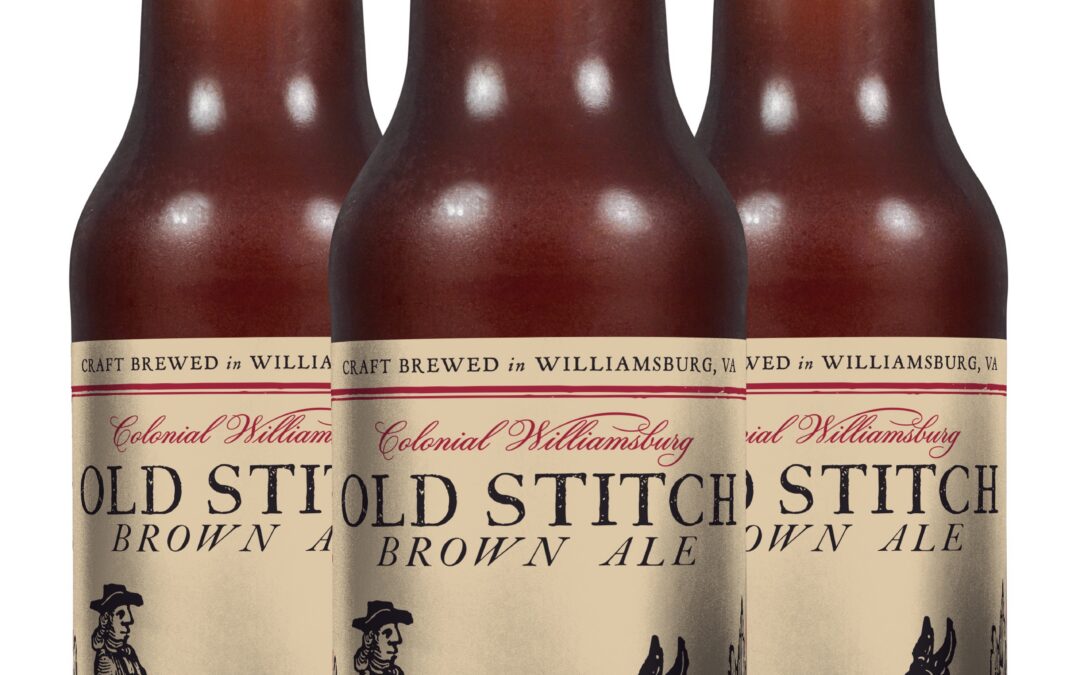
I’ve known Frank Clark for a long time. He’s the Master of Historic Foodways at Colonial Williamsburg, and honestly, there are maybe a handful of people on the planet who understand 18th-century brewing the way he does. Around 2007-2008, we started working together to take his historical interpretations of Olde Stitch and Dear Old Mum and figure out how to scale them up for production. That kind of collaboration — where someone has spent years digging through period texts, and you’re trying to honor what they found while also making something people want to drink — is not always a clean process. Frank made it one.
As for what was actually going into the mash in 1700s Williamsburg — it’s a stranger, more resourceful picture than most people expect. Malted barley, the obvious foundation, was genuinely hard to come by in colonial Virginia. So brewers improvised. Molasses was everywhere, cheap and fermentable — you’d boil it up with water, wheat bran, and whatever hops were around, and that was your beer. Virginia hops go back to 1621, so at least that part wasn’t hard. Beyond that, pumpkin, green corn stalks, spruce, pine — brewers used what the land offered. Spices figured prominently too; Dear Old Mum is a Brunswick Mum-style wheat ale built around grains of paradise, coriander, long pepper, and cardamom, and that’s not an accident — that’s what the historical record actually points to.
Water quality was poor enough that beer wasn’t a treat. It was breakfast. Lunch. Dinner. For everyone.
On porter versus brown ale — this is where it gets interesting. Porter was the dominant style in London by the 1720s, a populist drink named for the laborers who unloaded ships and consumed it in staggering quantities. It made its way to the colonies, and it had its loyal drinkers here, too. But it never really took hold in Virginia the way it did back home. The wealthier residents of Williamsburg — the Governor’s cellar, reportedly, held over a thousand bottles of imported English ale — were drinking what arrived by ship. Everyone else was making do with molasses beer. Brown ale is essentially porter’s direct ancestor anyway; porter started as a blend of strong, common, and weak brown ales before someone decided to brew the whole thing at once. In colonial Virginia, brown ale-style beers were the lived reality. Porter was an aspiration.